Language:en 
- zh-cn
- en
- ja
- fr
- ko
- de
- pt-pt
- es
FLAM Electronics



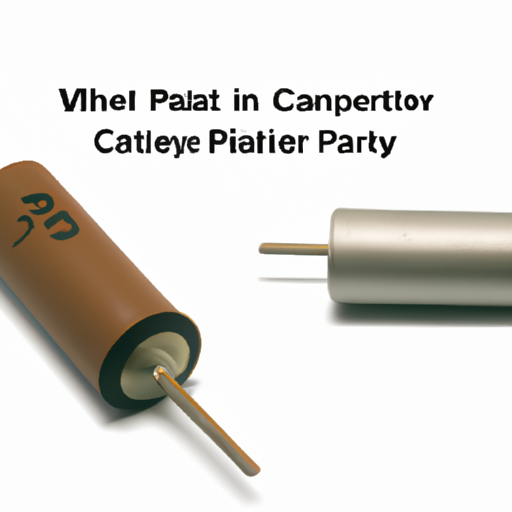
Series capacitors are electrical components that store and release electrical energy in a circuit. They are connected in series with a load, which allows them to influence the overall impedance of the circuit. By doing so, they can improve voltage regulation, enhance power quality, and provide reactive power support.
In electrical engineering, series capacitors play a crucial role in various applications, including power generation, transmission, and distribution. They are essential for improving the efficiency and reliability of electrical systems, particularly in high-voltage transmission lines and renewable energy installations. Their ability to mitigate voltage drops and enhance power factor makes them indispensable in modern electrical infrastructure.
Patents serve as a cornerstone for innovation, providing legal protection for inventors and encouraging the development of new technologies. In the realm of series capacitors, patents have facilitated advancements in design, materials, and applications, driving the evolution of capacitor technology and its integration into various industries.
The history of capacitors dates back to the 18th century with the invention of the Leyden jar, one of the first devices capable of storing electrical charge. Over the years, capacitor technology evolved, leading to the development of various types, including electrolytic, ceramic, and film capacitors.
The concept of series capacitors emerged as engineers sought ways to improve the performance of electrical systems. By connecting capacitors in series, they could effectively manage reactive power and enhance voltage stability in transmission lines. This innovation paved the way for more efficient power systems and laid the groundwork for modern applications.
Significant innovations in dielectric materials and capacitor design have transformed series capacitors into high-performance components. The introduction of advanced materials, such as polymer films and ceramic composites, has improved the efficiency and reliability of series capacitors, making them suitable for a wide range of applications.
Patent law provides inventors with exclusive rights to their inventions, encouraging research and development in technology. In the field of series capacitors, numerous patents have been filed, covering various aspects of design, materials, and applications. These patents not only protect the intellectual property of inventors but also contribute to the advancement of capacitor technology.
One of the foundational patents in series capacitor technology covers the basic design and functionality of series capacitors. This patent outlines the principles of connecting capacitors in series to achieve desired electrical characteristics, such as increased voltage handling and improved power factor. The impact of this patent on electrical systems has been profound, enabling engineers to design more efficient and reliable power networks.
Innovations in dielectric materials have led to the development of high-performance series capacitors. Patents related to these materials focus on improving the energy density, temperature stability, and overall performance of capacitors. For instance, patents for polymer-based dielectrics have resulted in capacitors that are lighter, more compact, and capable of operating at higher voltages, thus expanding their application range.
Several patents address the application of series capacitors in power systems, particularly for voltage regulation and stability. These patents describe methods for integrating series capacitors into transmission lines to mitigate voltage fluctuations and enhance system reliability. Additionally, patents related to harmonic filtering highlight the role of series capacitors in improving power quality by reducing harmonic distortion in electrical systems.
The advent of smart grid technology has led to the development of smart capacitors, which are equipped with sensors and communication capabilities. Patents in this area focus on the integration of series capacitors with the Internet of Things (IoT) for real-time monitoring and control. These innovations enable utilities to optimize capacitor operation, enhance grid stability, and improve overall energy efficiency.
Series capacitors are widely used in high-voltage transmission lines to improve voltage stability and increase transmission capacity. By compensating for reactive power, they help maintain voltage levels, reduce losses, and enhance the overall efficiency of the power grid.
In renewable energy systems, such as wind and solar farms, series capacitors play a vital role in managing power quality and ensuring stable operation. They help mitigate voltage fluctuations caused by intermittent energy sources, enabling smoother integration into the grid.
In industrial settings, series capacitors are commonly used for motor starting applications and power factor correction. By providing the necessary reactive power, they facilitate the smooth starting of large motors and improve the overall power factor of industrial facilities, leading to reduced energy costs.
Series capacitors are also employed in energy storage systems, where they can quickly release stored energy to meet peak demand. This capability is particularly valuable in applications requiring rapid response times, such as in grid stabilization and frequency regulation.
In consumer electronics, series capacitors are used in audio equipment to filter signals and improve sound quality. They help eliminate unwanted noise and enhance the overall performance of audio systems.
Series capacitors are integral components in power supply units, where they smooth out voltage fluctuations and ensure stable operation of electronic devices. Their ability to store and release energy efficiently makes them essential for reliable power delivery.
The future of series capacitors is likely to be shaped by advancements in nanotechnology and the development of new materials. Researchers are exploring the use of nanomaterials to create capacitors with higher energy densities, improved thermal stability, and enhanced performance characteristics.
As environmental concerns grow, the development of biodegradable capacitors is gaining traction. Patents related to eco-friendly materials and designs aim to reduce the environmental impact of capacitor production and disposal, paving the way for sustainable capacitor technologies.
Patents will continue to play a crucial role in fostering innovation in series capacitor technology. By protecting new ideas and encouraging investment in research and development, patents will drive the evolution of capacitor designs, materials, and applications.
While the future of series capacitors is promising, challenges such as material limitations, manufacturing costs, and regulatory hurdles may arise. However, these challenges also present opportunities for innovation and collaboration within the industry, leading to the development of more efficient and sustainable capacitor technologies.
Series capacitors are vital components in electrical engineering, playing a significant role in enhancing the efficiency and reliability of power systems. The patents associated with series capacitors have driven technological advancements, enabling the development of innovative designs and materials.
As the demand for efficient and sustainable energy solutions continues to grow, the need for innovation in capacitor technology remains critical. Ongoing research and development efforts, supported by patent protection, will be essential for addressing the challenges of the future.
The future of series capacitors is bright, with emerging technologies and innovative applications on the horizon. As industries evolve and adapt to new energy demands, series capacitors will undoubtedly play a pivotal role in shaping the future of electrical systems.
1. Patent No. XXXX - Basic Series Capacitor Design
2. Patent No. XXXX - Enhanced Dielectric Materials
3. Patent No. XXXX - Series Capacitor Applications in Power Systems
4. Patent No. XXXX - Smart Capacitor Technologies
1. Journal of Electrical Engineering
2. IEEE Transactions on Power Electronics
3. International Journal of Energy Research
1. Electrical Engineering Magazine
2. Journal of Power Sources
3. Energy Storage Materials
This blog post provides a comprehensive overview of the important patents related to series capacitors in the industry, highlighting their historical context, key innovations, applications, and future trends. The structured approach ensures a thorough understanding of the topic while emphasizing the significance of patents in driving technological advancement.