Language:en 
- zh-cn
- en
- ja
- fr
- ko
- de
- pt-pt
- es
FLAM Electronics



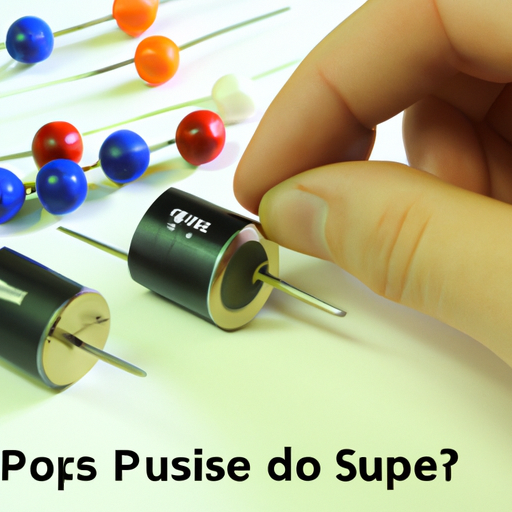
In the world of electronics, capacitors play a crucial role in various applications, from power supply circuits to signal processing. Among the different types of capacitors, spot pulse capacitors are specifically designed to handle high-frequency signals and rapid changes in voltage. Choosing the right spot pulse capacitor is essential for ensuring the reliability and performance of electronic devices. This article will guide you through the process of selecting the appropriate spot pulse capacitors for your specific needs.
Spot pulse capacitors are specialized capacitors designed to handle short bursts of electrical energy, making them ideal for applications that require rapid charge and discharge cycles. They are commonly used in power electronics, telecommunications, and automotive systems, where quick response times are critical.
The primary function of spot pulse capacitors is to store and release electrical energy quickly. This capability is essential in applications such as power supply smoothing, energy storage for pulsed laser systems, and filtering in RF circuits.
Spot pulse capacitors find applications across multiple industries, including:
Telecommunications: Used in signal processing and filtering.
Automotive: Employed in power management systems and electric vehicle applications.
Consumer Electronics: Found in power supplies and audio equipment.
Industrial Equipment: Utilized in motor drives and automation systems.
When selecting spot pulse capacitors, several key characteristics must be considered:
The capacitance value, measured in farads (F), indicates the capacitor's ability to store electrical charge. It is crucial to choose a capacitance value that meets the specific requirements of your application.
The voltage rating specifies the maximum voltage the capacitor can handle without failure. It is essential to select a capacitor with a voltage rating higher than the maximum voltage expected in the application.
ESR is a measure of the resistance encountered by the current flowing through the capacitor. Lower ESR values are preferable as they indicate better performance, especially in high-frequency applications.
ESL represents the inductance of the capacitor, which can affect its performance at high frequencies. A lower ESL is desirable for applications requiring rapid response times.
The ripple current rating indicates the maximum AC current the capacitor can handle without overheating. It is essential to choose a capacitor with a ripple current rating that meets or exceeds the demands of your application.
The type of circuit in which the capacitor will be used significantly influences the selection process. For instance, RF applications may require capacitors with specific frequency characteristics, while DC applications may prioritize voltage ratings.
Understanding the load conditions is vital. If the application involves transient loads, the capacitor must be capable of handling rapid changes in voltage and current.
Select a capacitor with the appropriate capacitance value and tolerance level. Tolerance indicates how much the actual capacitance may vary from the specified value.
Always choose a capacitor with a voltage rating that exceeds the maximum expected voltage. Additionally, consider derating the capacitor to enhance reliability, especially in high-temperature environments.
Evaluate the frequency response of the capacitor to ensure it meets the requirements of your application. Some capacitors perform better at specific frequency ranges.
Consider the operating temperature range of the application. Capacitors have different temperature ratings, and selecting one that can withstand the environmental conditions is crucial for long-term reliability.
In applications exposed to moisture, choose capacitors with appropriate humidity and moisture resistance ratings to prevent failure.
If the application involves mechanical stress or vibration, select capacitors designed to withstand these conditions without compromising performance.
Evaluate the available space on the printed circuit board (PCB). The physical size and form factor of the capacitor must fit within the design constraints.
Choose a mounting type that aligns with your PCB design. Surface mount capacitors are often preferred for compact designs, while through-hole capacitors may be used in applications requiring higher power handling.
Ceramic capacitors are known for their small size, low ESR, and high-frequency performance. However, they may have limited capacitance values and can be sensitive to voltage and temperature changes.
Commonly used in RF circuits, decoupling applications, and timing circuits.
Film capacitors offer excellent stability, low ESR, and high voltage ratings. However, they can be larger and more expensive than other types.
Used in audio equipment, power supplies, and motor drives.
Electrolytic capacitors provide high capacitance values in a compact size but have higher ESR and lower frequency response compared to other types.
Commonly found in power supply circuits and energy storage applications.
Tantalum capacitors offer high capacitance in a small package and excellent reliability. However, they can be more expensive and sensitive to voltage spikes.
Used in portable electronics, medical devices, and aerospace applications.
Evaluate the capacitor's ability to handle ripple current, as this is critical for applications with fluctuating loads.
Consider the expected lifetime and reliability of the capacitor, especially in demanding environments.
The self-resonant frequency indicates the frequency at which the capacitor behaves like an inductor. Ensure the capacitor's self-resonant frequency aligns with your application requirements.
The temperature coefficient indicates how the capacitance value changes with temperature. Choose capacitors with suitable temperature coefficients for your application.
Select capacitors from reputable manufacturers known for quality and reliability. Research their product lines and customer reviews.
Ensure that the capacitors meet industry standards and undergo rigorous testing to guarantee performance and reliability.
Consider the availability of the capacitors and the lead times for procurement, especially for large projects.
Evaluate the cost of the capacitors against their performance characteristics. Sometimes, investing in higher-quality components can lead to better long-term reliability.
Always double-check the voltage ratings to avoid catastrophic failures.
Consider environmental conditions that may affect capacitor performance, such as temperature and humidity.
Ensure the selected capacitor can handle the expected ripple current to prevent overheating and failure.
Prioritize long-term reliability over short-term cost savings to avoid future issues.
Choosing the right spot pulse capacitor is a critical step in ensuring the performance and reliability of electronic devices. By understanding the characteristics, types, and factors to consider, you can make informed decisions that meet your specific application requirements. Always conduct thorough research and consult with experts when necessary to ensure optimal results.
- "Capacitor Technology and Applications" by John Smith
- "Understanding Capacitors: A Comprehensive Guide" by Jane Doe
- IEC 60384: Fixed capacitors for use in electronic equipment
- MIL-PRF-39014: General specification for capacitors
- [Murata Manufacturing Co., Ltd.](https://www.murata.com)
- [KEMET Corporation](https://www.kemet.com)
By following this guide, you can confidently select the right spot pulse capacitors for your projects, ensuring optimal performance and reliability in your electronic designs.