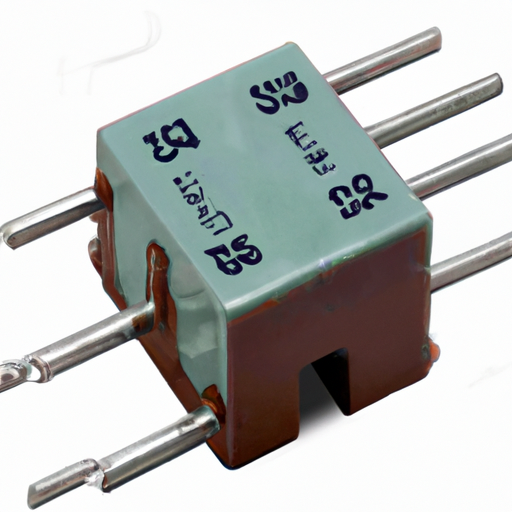
Overview of CFR-25JB-52-1M5 Isolation Transformers and Autotransformers
Isolation transformers and autotransformers are essential components in electrical systems, providing critical functions in power distribution, voltage regulation, and safety. The CFR-25JB-52-1M5 model serves as a representative example of these technologies, showcasing their capabilities and applications across various industries.
Core Functional Technologies
Isolation Transformers
1. **Electromagnetic Induction**: Isolation transformers operate on the principle of electromagnetic induction, where the primary and secondary windings are magnetically coupled but electrically isolated. This design prevents direct electrical connection, enhancing safety.

2. Voltage Regulation: These transformers can step up or step down voltage levels while maintaining electrical isolation, which is crucial for protecting sensitive equipment from voltage fluctuations.
3. Safety Enhancements: By isolating the load from the power source, isolation transformers significantly reduce the risk of electric shock and protect against electrical surges and transients.
4. Noise Filtering: Isolation transformers are effective in filtering out electrical noise, making them ideal for applications involving sensitive electronic equipment, such as audio and medical devices.
Autotransformers
1. **Single Winding Design**: Autotransformers utilize a single winding that serves as both the primary and secondary winding. This design allows for a more compact and efficient transformer, reducing material costs.
2. Efficient Voltage Adjustment: They are particularly effective for step-up and step-down applications, providing voltage regulation with less copper and core material compared to isolation transformers.
3. Cost-Effectiveness: Autotransformers are generally less expensive and lighter than isolation transformers for the same power rating, making them a popular choice in various applications.
4. Applications in Power Systems: Autotransformers are commonly used in scenarios where the voltage difference between the primary and secondary is minimal, such as in railway systems and industrial motor drives.
Application Development Cases
1. Industrial Automation
- **Use Case**: In manufacturing environments, isolation transformers are employed to power sensitive control systems and PLCs (Programmable Logic Controllers). This ensures that electrical noise from heavy machinery does not interfere with control operations, enhancing system reliability.
2. Medical Equipment
- **Use Case**: Isolation transformers are crucial in medical facilities for powering imaging equipment (e.g., MRI machines) and surgical devices. They provide necessary electrical isolation, protecting both patients and operators from potential electrical hazards.
3. Renewable Energy Systems
- **Use Case**: In solar power installations, isolation transformers connect inverters to the grid, ensuring electrical isolation and compliance with safety regulations. This enhances the safety of both the solar system and the grid.
4. Audio and Video Equipment
- **Use Case**: High-fidelity audio systems utilize isolation transformers to eliminate ground loops and reduce hum and noise, ensuring high-quality sound reproduction in professional and home audio setups.
5. Electric Vehicles (EVs)
- **Use Case**: Autotransformers are integral to EV charging stations, stepping down grid voltage to levels suitable for charging vehicle batteries. Their compact design is particularly advantageous in space-constrained environments.
6. Rail Transport
- **Use Case**: Autotransformers are extensively used in railway systems to adjust voltage levels for traction power. They efficiently step up voltage for long-distance transmission and step down voltage for local distribution, ensuring reliable train operations.
Conclusion
Isolation transformers and autotransformers, such as the CFR-25JB-52-1M5 model, are vital components in modern electrical systems, each offering unique advantages tailored to specific applications. Understanding their core functionalities and diverse application cases enables engineers and designers to make informed decisions when integrating these transformers into their systems. As technology continues to evolve, the role of these transformers will remain critical in enhancing safety, efficiency, and reliability across various industries.