Language:en 
- zh-cn
- en
- ja
- fr
- ko
- de
- pt-pt
- es
FLAM Electronics


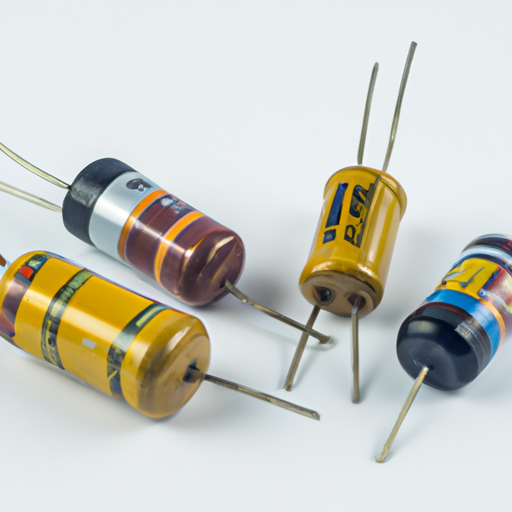
Capacitors are essential components in electronic circuits, playing a crucial role in various applications ranging from power supply filtering to signal processing. These passive electronic devices store and release electrical energy, making them indispensable in modern electronics. In this article, we will explore the fundamental principles of capacitors, their key product characteristics, specialized features, and their diverse applications in the electronic landscape.
At its core, a capacitor consists of two conductive plates separated by an insulating material known as a dielectric. When a voltage is applied across the plates, an electric field is created, allowing the capacitor to store electrical energy. The amount of charge a capacitor can hold is defined by its capacitance, which is measured in farads (F).
The charge storage mechanism of a capacitor is based on the principle of electrostatics. When a voltage is applied, electrons accumulate on one plate, creating a negative charge, while the other plate loses electrons, resulting in a positive charge. This separation of charge creates an electric field between the plates, which can be harnessed for various applications.
Capacitance is the measure of a capacitor's ability to store charge per unit voltage. It is expressed in farads, with common subunits including microfarads (µF) and picofarads (pF). The formula for capacitance (C) is given by:
\[ C = \frac{Q}{V} \]
where \( Q \) is the charge stored in coulombs, and \( V \) is the voltage across the capacitor.
Capacitors come in various types, each with unique characteristics suited for specific applications. The most common types include:
Electrolytic capacitors are polarized devices that offer high capacitance values in a relatively small package. They are commonly used in power supply applications due to their ability to handle large amounts of charge.
Ceramic capacitors are non-polarized and are known for their stability and reliability. They are widely used in high-frequency applications and are available in various capacitance values.
Film capacitors use a thin plastic film as the dielectric material. They are known for their low ESR and high voltage ratings, making them suitable for audio and high-frequency applications.
Tantalum capacitors are known for their high capacitance-to-volume ratio and stability. They are often used in compact electronic devices where space is limited.
Supercapacitors, or ultracapacitors, are designed for high energy storage and rapid charge/discharge cycles. They are commonly used in energy storage applications, such as in renewable energy systems.
When selecting a capacitor for a specific application, several key product characteristics must be considered.
Capacitance is measured in farads, with microfarads (µF) and picofarads (pF) being the most commonly used units in practical applications. The capacitance value determines how much charge the capacitor can store.
Tolerance refers to the allowable variation in capacitance from the specified value. Capacitors are available with different tolerance levels, which can affect circuit performance. Common tolerances include ±5%, ±10%, and ±20%.
The voltage rating indicates the maximum voltage a capacitor can withstand without breaking down. Exceeding this rating can lead to catastrophic failure, making it crucial to select a capacitor with an appropriate voltage rating for the application.
To enhance reliability, it is recommended to derate capacitors by operating them at a voltage lower than their maximum rating, typically around 70-80% of the rated voltage.
Equivalent Series Resistance (ESR) is the internal resistance of a capacitor that affects its performance, particularly in high-frequency applications. A lower ESR indicates better performance and efficiency.
High ESR can lead to power loss and heat generation, which can affect the overall performance of the circuit. Therefore, selecting capacitors with low ESR is essential for applications requiring high efficiency.
The temperature coefficient indicates how the capacitance value changes with temperature. Different types of capacitors have varying temperature coefficients, such as C0G (Class 1) and X7R (Class 2).
Temperature variations can significantly impact the performance of capacitors, especially in precision applications. Understanding the temperature coefficient is crucial for ensuring stable operation across varying environmental conditions.
The lifespan of a capacitor is influenced by factors such as temperature, voltage, and ripple current. Operating conditions that exceed the manufacturer's specifications can lead to premature failure.
Common failure modes for capacitors include dielectric breakdown, electrolyte leakage (in electrolytic capacitors), and loss of capacitance. Understanding these failure modes can help in selecting reliable components for critical applications.
Capacitors exhibit frequency-dependent behavior, characterized by their impedance and reactance. At higher frequencies, the reactance decreases, allowing capacitors to pass AC signals while blocking DC.
In high-frequency applications, such as RF circuits, capacitors are used for filtering, coupling, and decoupling signals. Their frequency response is critical for ensuring optimal performance.
Leakage current is the small amount of current that flows through a capacitor even when it is not connected to a circuit. It is an important characteristic, especially in applications requiring low power consumption.
Excessive leakage current can lead to power loss and affect the performance of sensitive circuits. Selecting capacitors with low leakage current is essential for battery-powered and low-power applications.
The physical size of a capacitor can impact its suitability for specific applications. Smaller capacitors are often preferred in compact electronic devices, while larger capacitors may be used in power applications.
Capacitors are available in various mounting types, including through-hole and surface mount. The choice of mounting type depends on the design requirements and available space on the circuit board.
The dielectric material used in a capacitor significantly influences its performance characteristics. Common dielectric materials include ceramic, polyester, polypropylene, and tantalum oxide, each with unique properties.
The choice of dielectric material affects factors such as capacitance stability, temperature coefficient, and voltage rating. Understanding these properties is essential for selecting the right capacitor for a specific application.
Capacitors are used in a wide range of applications, including:
Capacitors are commonly used in power supply circuits to smooth out voltage fluctuations and filter out noise, ensuring stable operation of electronic devices.
In signal processing applications, capacitors are used to couple and decouple signals, allowing AC signals to pass while blocking DC components.
Capacitors play a crucial role in timing circuits, where they are used in conjunction with resistors to create time delays and oscillations.
Supercapacitors are increasingly used in renewable energy systems for energy storage, providing rapid charge and discharge capabilities to support grid stability.
In electric motors, capacitors are used to provide the necessary starting torque and to improve efficiency during operation.
In summary, capacitors are vital components in electronic circuits, with a wide range of product characteristics that influence their performance. Understanding these characteristics, including capacitance value, voltage rating, ESR, temperature coefficient, and reliability, is essential for selecting the right capacitor for specific applications. As technology continues to evolve, advancements in capacitor technology will likely lead to new applications and improved performance, making capacitors an exciting area of study in the field of electronics.
1. "Capacitors: Principles and Applications" by John Smith
2. "The Art of Electronics" by Paul Horowitz and Winfield Hill
1. IEC 60384 - Fixed capacitors for use in electronic equipment
2. EIA-198 - Standard for Capacitor Specifications
By understanding the product characteristics of capacitors, engineers and designers can make informed decisions that enhance the performance and reliability of their electronic circuits.