Language:en 
- zh-cn
- en
- ja
- fr
- ko
- de
- pt-pt
- es
FLAM Electronics



In the realm of electronics, capacitors play a pivotal role in the functionality and efficiency of circuits. Among the various types of capacitors, film capacitors stand out due to their unique properties and applications. This article aims to delve into the world of film capacitors, exploring their definition, characteristics, advantages, disadvantages, and applications, while also looking ahead to future trends in this technology.
At its core, capacitance is the ability of a component to store electrical energy in an electric field. When a voltage is applied across a capacitor, an electric field is created between its plates, allowing it to store charge. The amount of charge a capacitor can hold is directly proportional to the voltage applied and the surface area of the plates, while inversely proportional to the distance between them.
Capacitors come in various forms, each suited for specific applications. The most common types include:
1. **Electrolytic Capacitors**: Known for their high capacitance values, these capacitors are polarized and typically used in power supply circuits.
2. **Ceramic Capacitors**: These are non-polarized and offer stability and reliability, making them ideal for high-frequency applications.
3. **Film Capacitors**: These capacitors utilize a thin plastic film as the dielectric material, providing excellent performance in various applications.
Capacitors are integral to numerous electronic applications, including energy storage, filtering, coupling, and decoupling in circuits. Their ability to smooth out voltage fluctuations and store energy makes them essential components in power supplies, audio equipment, and many other devices.
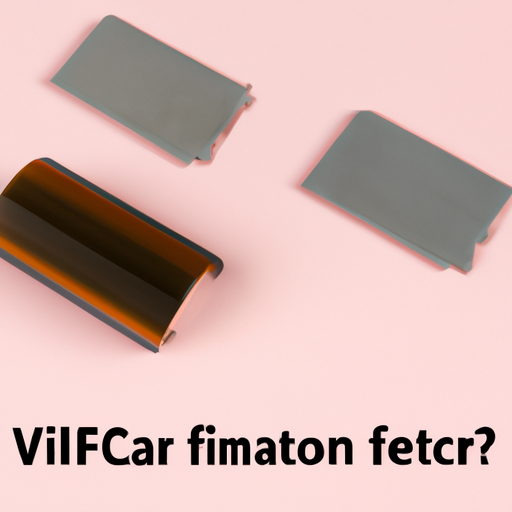
Film capacitors are a type of capacitor that uses a thin plastic film as the dielectric material. This film can be made from various materials, including polyester, polypropylene, and polycarbonate. The choice of dielectric material significantly influences the capacitor's performance characteristics.
The dielectric materials used in film capacitors are crucial for their performance. For instance, polypropylene film capacitors are known for their low dielectric losses and high insulation resistance, making them suitable for high-frequency applications.
Film capacitors can be categorized based on the type of dielectric used, including:
Polyester (Mylar): Commonly used for general-purpose applications.
Polypropylene: Offers superior performance in audio and high-frequency applications.
Polycarbonate: Known for its stability and reliability, often used in precision applications.
The manufacturing of film capacitors involves several key steps:
The process begins with the production of the dielectric film, which is typically extruded or cast into thin sheets.
The dielectric film is then layered with metal electrodes, which can be applied through various methods, including vacuum deposition. The layers are then wound into a cylindrical shape or stacked, depending on the design.
Finally, the wound or stacked capacitors are encapsulated in protective materials to ensure durability and reliability. This encapsulation also helps in preventing moisture ingress, which can degrade performance.
Film capacitors exhibit several key electrical properties:
Film capacitors are available in a wide range of capacitance values, typically from a few picofarads to several microfarads.
These capacitors can handle various voltage ratings, often ranging from a few volts to several kilovolts, depending on the application.
Film capacitors generally have low tolerance levels, often around ±5% to ±10%, which makes them suitable for precision applications.
In addition to their electrical characteristics, film capacitors possess several notable physical properties:
Film capacitors come in various sizes and form factors, including axial, radial, and surface mount configurations, allowing for flexibility in design.
These capacitors are known for their excellent temperature stability, maintaining performance across a wide temperature range.
Film capacitors typically have a long lifespan and high reliability, often exceeding 10,000 hours of operation, making them a preferred choice in critical applications.
Film capacitors offer several advantages that make them a popular choice in various applications:
Film capacitors exhibit low ESR, which minimizes energy losses and improves efficiency in circuits.
Their high insulation resistance ensures minimal leakage current, enhancing overall circuit performance.
Film capacitors maintain stable performance across a wide range of temperatures and frequencies, making them suitable for demanding applications.
Unlike electrolytic capacitors, film capacitors are non-polarized, allowing for flexible installation without concern for polarity. This feature enhances safety and reliability.
Many film capacitors are made from environmentally friendly materials, and their long lifespan contributes to reduced electronic waste.
Despite their many advantages, film capacitors also have some drawbacks:
Film capacitors tend to be larger and heavier than other types, such as ceramic capacitors, which can be a limitation in compact electronic designs.
The manufacturing process and materials used in film capacitors can make them more expensive than alternatives like ceramic or electrolytic capacitors.
While film capacitors are available in various capacitance values, they may not meet the high capacitance requirements of some applications, such as power supply filtering.
Film capacitors find applications across a wide range of industries:
In audio applications, film capacitors are favored for their low distortion and high-frequency response, making them ideal for coupling and decoupling signals.
Film capacitors are commonly used in power electronics for energy storage, filtering, and snubber circuits due to their high voltage ratings and reliability.
In industrial settings, film capacitors are utilized in motor drives, power supplies, and control systems, where stability and performance are critical.
With the rise of renewable energy technologies, film capacitors are increasingly used in solar inverters and wind turbine systems for their efficiency and reliability.
From televisions to smartphones, film capacitors are integral to the performance of various consumer electronic devices, ensuring stable operation and energy efficiency.
As technology continues to evolve, so does the field of film capacitors. Several trends are shaping the future of this technology:
Research is ongoing to develop new dielectric materials that enhance performance while reducing costs. Innovations in manufacturing processes are also aimed at improving efficiency and scalability.
The growing demand for electric vehicles and renewable energy systems is driving the need for high-performance capacitors, including film capacitors, to support energy storage and management.
As electronic devices become smaller and more powerful, there is a push for miniaturization in capacitor technology. Advances in materials and design may lead to smaller, more efficient film capacitors that meet the demands of modern electronics.
In summary, film capacitors are a vital component in the world of electronics, offering unique advantages that make them suitable for a wide range of applications. Their stability, reliability, and performance characteristics position them as a preferred choice in many critical systems. As technology continues to advance, the role of film capacitors will likely expand, paving the way for innovations that enhance their performance and applicability. For those interested in electronics, understanding film capacitors is essential for appreciating their significance in modern technology.
For further reading and exploration of film capacitors, consider the following resources:
- "Capacitors: Technology and Applications" by John Smith
- IEEE Standards for Capacitor Technology
- Manufacturer datasheets and application notes for specific film capacitor products
By delving deeper into the world of capacitors, enthusiasts and professionals alike can gain a better understanding of their importance and the innovations that continue to shape this field.