Language:en 
- zh-cn
- en
- ja
- fr
- ko
- de
- pt-pt
- es
FLAM Electronics



Capacitors are essential components in electronic devices, serving as energy storage units that can release energy quickly when needed. They play a crucial role in various applications, from smoothing out voltage fluctuations in power supplies to enabling signal processing in communication devices. Understanding the production processes of capacitors is vital for appreciating their functionality and the advancements in technology that continue to enhance their performance.
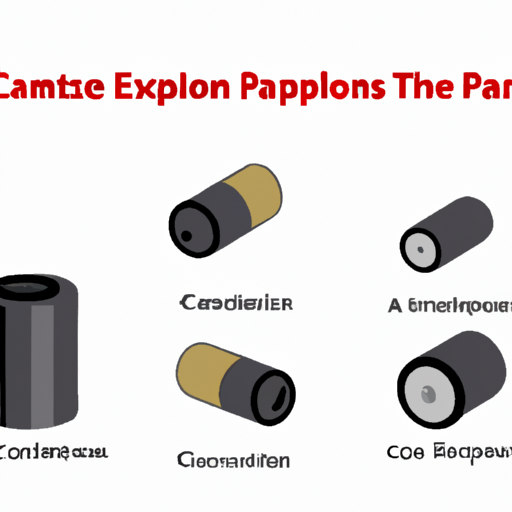
Capacitors come in various types, each designed for specific applications and performance characteristics. The most common types include:
These capacitors use ceramic materials as the dielectric. They are known for their stability, reliability, and small size, making them ideal for high-frequency applications.
Electrolytic capacitors are polarized and typically used in power supply applications due to their high capacitance values. They utilize an electrolyte as one of the plates, which allows for a larger capacitance in a smaller volume.
Film capacitors use thin plastic films as the dielectric. They are known for their excellent stability and low loss, making them suitable for audio and high-frequency applications.
These capacitors use tantalum metal for the anode and are known for their high capacitance and reliability. They are often used in compact electronic devices.
Supercapacitors, or ultracapacitors, have a much higher capacitance than traditional capacitors and are used for energy storage applications, such as in electric vehicles and renewable energy systems.
Each type of capacitor has its advantages and disadvantages, making them suitable for different applications. For instance, while ceramic capacitors are excellent for high-frequency applications, electrolytic capacitors are preferred for power supply filtering due to their high capacitance.
The production of capacitors involves various raw materials, each contributing to the capacitor's performance and reliability.
1. **Ceramic**: Used in ceramic capacitors, these materials provide excellent dielectric properties.
2. **Polymer Films**: Employed in film capacitors, polymer films offer low loss and high stability.
3. **Electrolytes**: In electrolytic capacitors, electrolytes are crucial for forming the dielectric layer.
1. **Metals**: Aluminum and tantalum are commonly used for the anodes in electrolytic and tantalum capacitors, respectively.
2. **Conductive Polymers**: These materials are used in some types of capacitors to enhance conductivity.
1. **Adhesives**: Used for bonding layers in multilayer capacitors.
2. **Coatings**: Protective coatings are applied to enhance durability and performance.
The production processes for capacitors vary depending on the type, but several common steps are involved.
1. **Material Preparation**: Raw ceramic powders are mixed and processed to achieve the desired dielectric properties.
2. **Forming and Shaping**: The mixture is shaped into the desired form, often using pressing techniques.
3. **Sintering**: The shaped ceramic is heated to high temperatures to densify the material and enhance its dielectric properties.
4. **Electrode Application**: Electrodes are applied to the ceramic body, typically using screen printing or sputtering techniques.
5. **Finishing and Testing**: The capacitors are finished with coatings and undergo rigorous testing to ensure quality.
1. **Anode Preparation**: Aluminum or tantalum is processed into thin foils, which are then etched to increase surface area.
2. **Oxide Layer Formation**: Anodization is performed to create a thin oxide layer that acts as the dielectric.
3. **Electrolyte Filling**: The capacitor is filled with an electrolyte solution, which is crucial for its operation.
4. **Sealing and Finishing**: The capacitor is sealed to prevent leakage and finished with protective coatings.
5. **Testing and Quality Control**: Each capacitor undergoes testing to ensure it meets specifications.
1. **Film Production**: Thin films of polymer are produced through extrusion or casting.
2. **Metallization**: A conductive layer is applied to the film, often using vacuum deposition techniques.
3. **Winding or Stacking**: The metallized film is either wound into a cylindrical shape or stacked in layers.
4. **Encapsulation**: The assembled capacitor is encapsulated to protect it from environmental factors.
5. **Testing and Quality Assurance**: Rigorous testing is conducted to ensure performance and reliability.
1. **Tantalum Powder Preparation**: Tantalum is processed into fine powder for anode formation.
2. **Anode Formation**: The powder is compacted and sintered to form the anode.
3. **Oxide Layer Growth**: Anodization is performed to create the dielectric oxide layer.
4. **Electrolyte Application**: An electrolyte is applied to enhance performance.
5. **Sealing and Testing**: The capacitor is sealed and tested for quality assurance.
1. **Electrode Preparation**: High-surface-area materials, such as activated carbon, are prepared for the electrodes.
2. **Electrolyte Selection**: A suitable electrolyte is chosen based on the application requirements.
3. **Assembly of Cells**: The electrodes and electrolyte are assembled into cells.
4. **Testing and Quality Assurance**: Each supercapacitor undergoes testing to ensure it meets performance standards.
Quality control is paramount in capacitor production, as even minor defects can lead to failure in electronic devices. Common testing methods include:
Ensuring the reliability and performance of capacitors is critical, especially in applications where failure can lead to significant consequences.
1. **Capacitance Measurement**: This tests the capacitor's ability to store charge.
2. **Leakage Current Testing**: Measures the current that leaks through the dielectric, indicating potential failures.
3. **ESR (Equivalent Series Resistance) Testing**: Evaluates the internal resistance of the capacitor, which affects its efficiency.
4. **Endurance Testing**: Simulates long-term use to ensure reliability over time.
As the electronics industry grows, so does the need for sustainable practices in capacitor production.
Efforts are made to minimize waste during production, including recycling materials and reducing emissions.
Recycling programs are in place to recover valuable materials from end-of-life capacitors, reducing environmental impact.
Manufacturers must adhere to regulations that govern the use of hazardous materials and waste disposal.
The capacitor industry is evolving, driven by advancements in technology and materials science.
Research into new dielectric materials and conductive polymers is paving the way for capacitors with improved performance and efficiency.
The integration of automation and smart manufacturing practices is enhancing production efficiency and quality control.
There is a growing emphasis on sustainable practices, including the use of eco-friendly materials and processes.
Capacitors are vital components in modern electronics, and understanding their production processes is essential for appreciating their role in technology. As the industry continues to innovate, advancements in materials and production techniques will lead to more efficient and reliable capacitors. The future of capacitor technology looks promising, with a focus on sustainability and performance enhancement, ensuring that these essential components will continue to meet the demands of an ever-evolving electronic landscape.